The Longevity Molecule: Exploring the Science of C60 and ESS60 with Chris Burres
Welcome back to Light Body Radio!
Could a molecule made entirely of carbon hold clues to the future of longevity research?
The science of healthy aging is evolving rapidly. From cellular biology and metabolic health to emerging compounds and biohacking technologies, researchers continue to explore why we age and whether some aspects of the aging process can be influenced.
One molecule that has generated considerable curiosity is C60, also known as buckminsterfullerene or fullerene C60.
With its unusual spherical structure made up of 60 carbon atoms, C60 captured the attention of the scientific community following its discovery in 1985. Its unique structure, chemical properties, and potential applications have made it a subject of research across multiple scientific fields.
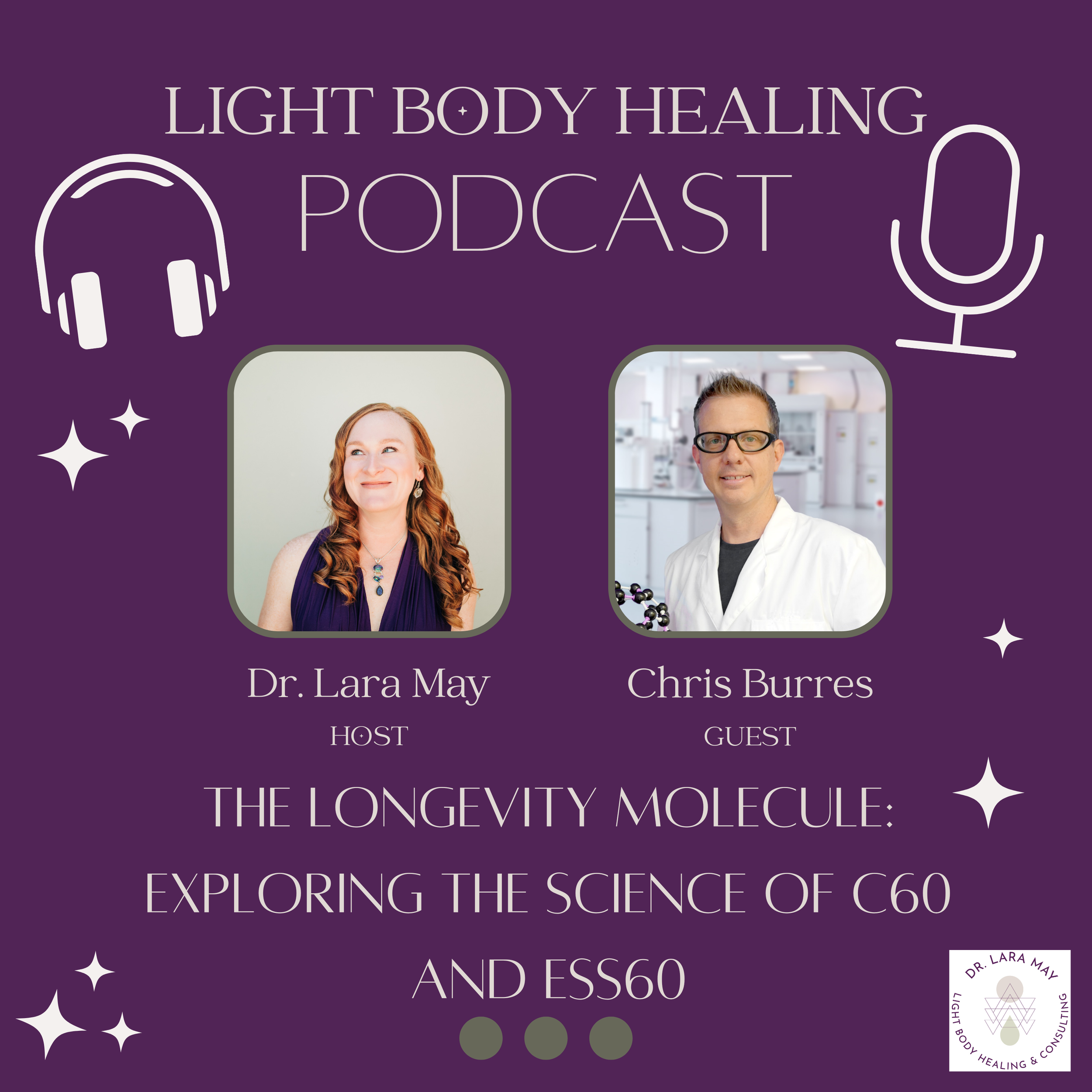
In this episode of LightBody Radio, Dr. Lara May sits down with research engineer, inventor, author, and longevity advocate Chris Burres to explore the history, science, and potential applications of C60 and ESS60.
What Is C60?
C60 is a molecule consisting of 60 carbon atoms arranged in a spherical structure.
One of the easiest ways to visualize its structure is to imagine a soccer ball. The carbon atoms form a cage-like structure with a hollow space inside.
This unusual molecular architecture is one of the reasons C60 has attracted so much scientific interest.
The molecule was discovered in 1985 by researchers at Rice University, and the discovery eventually led to the scientists involved receiving the 1996 Nobel Prize in Chemistry.
C60 has since been studied in a variety of scientific contexts, including materials science, chemistry, nanotechnology, and biological research.
Why Is C60 Connected to Longevity?
One of the reasons C60 became particularly interesting within the longevity and biohacking communities was research involving laboratory animals.
Chris discusses research in which a particular C60 preparation was associated with a substantial extension of lifespan in laboratory rats.
However, there is an important scientific distinction to make.
The reported lifespan extension occurred in rats—not humans.
Animal studies can provide valuable information about biological mechanisms and potential areas for future research, but results in animals cannot automatically be translated into equivalent outcomes in people.
That distinction is especially important when discussing longevity, supplements, and emerging health technologies.
The conversation highlights the importance of being curious about emerging science while also understanding what the evidence actually demonstrates.
C60, ESS60, and Why Processing Matters
Another major topic discussed in the episode is the distinction between C60 and ESS60.
While C60 refers to the underlying carbon molecule, Chris explains that ESS60 refers to a particular preparation of C60 intended for use in people and pets.
This distinction matters because the properties and safety considerations of a material can depend on how it is produced, processed, formulated, and used.
Chris discusses why industrial C60 and material intended for biological applications should not necessarily be treated as interchangeable.
For anyone interested in emerging compounds, this is an important reminder that understanding the specific formulation and manufacturing process matters just as much as understanding the underlying molecule.
The Nobel Prize-Winning Discovery Behind the Molecule
C60's story begins in 1985 when scientists discovered a previously unknown form of carbon.
At the time, carbon was already well known in forms such as graphite and diamond. The discovery of a stable, spherical carbon molecule opened an entirely new area of chemistry.
The structure was eventually recognized as resembling the geodesic domes designed by architect Buckminster Fuller, which inspired the name buckminsterfullerene.
The discovery was significant enough that the researchers behind it were awarded the Nobel Prize in Chemistry in 1996.
Today, fullerene chemistry continues to be an area of scientific research.
What Does This Mean for Human Longevity?
This is where scientific curiosity needs to meet scientific discipline.
Research involving C60 and longevity is interesting, but it is important not to confuse promising laboratory findings with established human outcomes.
A lifespan result in an animal model does not mean that humans will experience the same result.
Human longevity is influenced by an enormous number of variables, including genetics, metabolic health, cardiovascular health, environmental exposures, lifestyle, nutrition, physical activity, sleep, stress, socioeconomic factors, and access to healthcare.
More research is necessary to determine what, if any, meaningful longevity effects C60 or specific C60 formulations may have in humans.
For listeners interested in emerging longevity science, the most useful approach is to remain curious while asking important questions:
What population was studied?
Was the research conducted in animals or humans?
What formulation was used?
What dose was studied?
How was the compound processed?
Was the research independently replicated?
What are the known risks?
What outcomes were actually measured?
How strong is the current evidence?
These questions help separate scientific investigation from exaggerated health claims.
C60 and the Future of Longevity Research
The growing interest in C60 reflects a larger trend within longevity science: researchers and innovators are exploring new ways to understand oxidative stress, cellular function, aging biology, and the mechanisms that influence healthspan.
The distinction between lifespan and healthspan is particularly important.
Living longer is not necessarily the same as living better.
For many people interested in longevity, the real goal is not simply adding years to life. It is maintaining physical function, cognitive health, mobility, independence, and quality of life for as long as possible.
That is where the broader conversation around healthy aging becomes particularly interesting.
A Conversation About Curiosity, Science, and Longevity
Chris Burres brings decades of experience working with C60 and supplying the molecule to research institutions, offering listeners a behind-the-scenes perspective on how an unusual scientific discovery evolved into an area of interest within longevity and biohacking.
Throughout the conversation, Dr. Lara and Chris also emphasize the importance of transparency when discussing scientific findings.
The question isn't simply:
"Does C60 make humans live longer?"
The more useful question is:
"What does the existing research actually tell us, what remains unknown, and what should researchers investigate next?"
That distinction allows us to remain open to innovation without abandoning scientific rigor.
What You'll Discover in This Episode
In this episode of LightBody Radio, you'll learn more about:
What C60 is and why its structure is so unique
How the C60 molecule was discovered
The Nobel Prize-winning science behind fullerene research
Why C60 has attracted interest in longevity and biohacking
What animal research has shown about C60 and lifespan
Why animal research cannot automatically be translated into human outcomes
The difference between C60 and ESS60
Why processing and formulation matter
The history of C60 manufacturing and research
The potential future of C60 within longevity science
Why transparency and scientific context matter when evaluating emerging health research
Whether you're fascinated by longevity, healthy aging, biohacking, emerging science, or the future of human health, this episode offers a fascinating introduction to one of the most unusual molecules in modern chemistry.
The future of longevity may still hold many unanswered questions. C60 is one fascinating piece of that ongoing scientific conversation.
About My Guest:
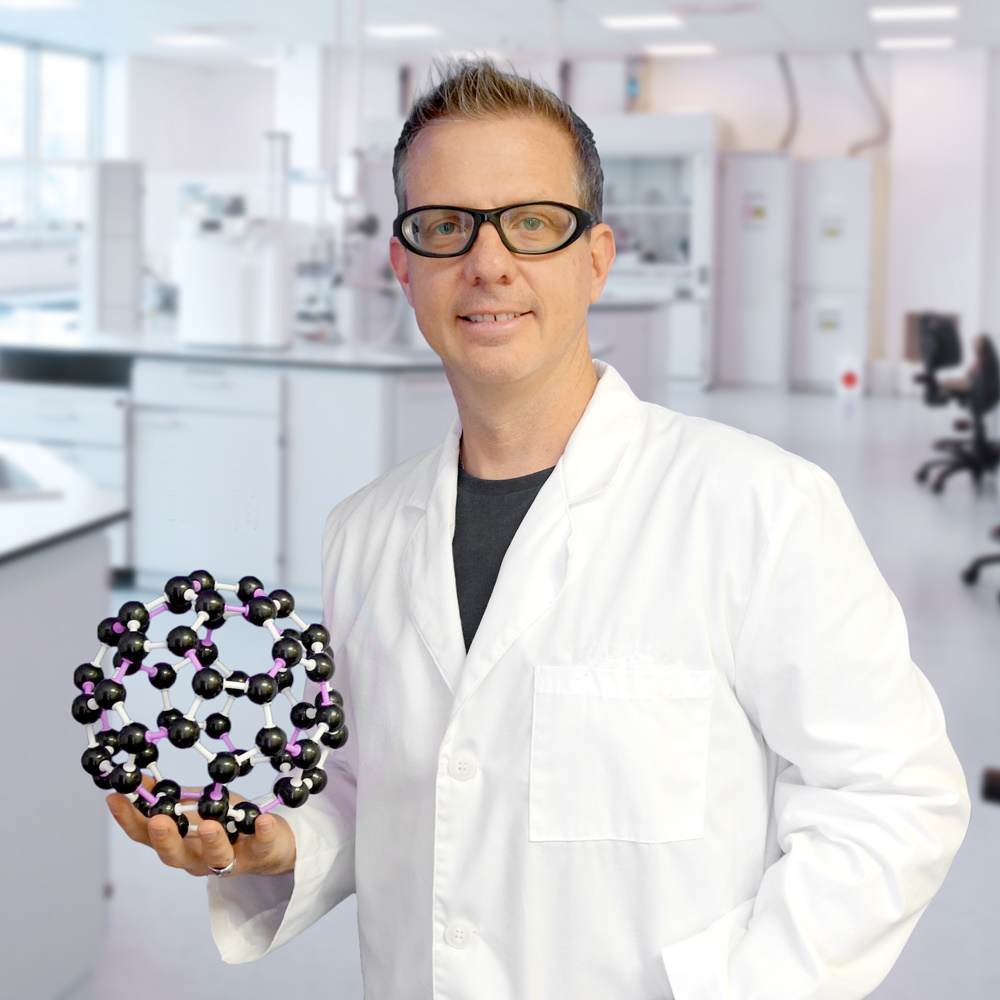
CHRIS BURRES
is a research engineer, founder, and chief scientist of MyVitalC, host of Live Beyond the Norms, and the author of Live Longer and Better. His primary mission is to help people live longer, healthier, pain-free lives. Drawing on a background in inventions, manufacturing, and internet technology, Chris has built his career around bringing scientific innovation into the real world.
Since the early 1990s, he has been producing ESS60, a Nobel Prize-winning molecule shown in studies to extend the lifespan of test subjects by 90 percent, supplying research institutions worldwide years before it became known in the biohacking space.
Contact Chris:
Website: https://www.myvitalc.com/
Pinterest: https://www.pinterest.com/myvitalc/
Instagram: https://www.instagram.com/myvitalc/
YouTube: https://www.youtube.com/myvitalc
TikTok: https://www.tiktok.com/@myvitalc
Special Listener Offer:
Interested in exploring C60 and ESS60 for yourself? As a special offer for Light Body Radio listeners, you can receive up to $15 off your purchase from MyVitalC.
Use the exclusive LightBody offer here:
Shop C60 & ESS60 with the Light Body Offer
Don't forget to rate and review Light Body Radio
→
Other ways to listen to today’s episode:
There is lots more on the way!
Don't miss it!
Namaste,

Subscribe
Join and receive exclusive tools, tips, and resources directly from Dr. Lara, plus a FREE copy of the Health Gut Guide!!
Find More Episodes
- 2024 3
- 2024 achievements 2
- 2024 grateful 2
- 2024 reflections 2
- 2025 1
- 4 step approach to gut health 2
- 4th chakra 1
- 90-days goal 1
- ALCAT testing for food intolerances 1
- Accomplist 1
- Adora Winquist 2
- Alie Harwood 1
- Anita Kaiser 1
- Autumn 6
- Ayahuasquera 1
- BPC-157 4
- Blending science 1
- Brain health 5
- C60 2
- COVID-19 5
- Catherine Laub 2
- Creatine 1
- DSIP 3
- David Krantz 4
- David greenwalt 1
- Delta Sleep-Inducing Peptide 3
- Dr Melissa MacDonald 1
- Dr Shawna Jamieson 2
- Dr. Jo Anne WhiteDr Jo Anne WhiteJo Anne White PhDJo Anne WhitePower Your LifePower Your Life RadioDr. JoAnne WhiteJoanne white#poweryourlife#jwpoweryourlifePower Your Life Talk RadioPower Your Life Talk Radio ShowIntegrative Nutrition Health CoachIINHealth CoachDr. Lara MayLara MaLara Mayenergy medicineintuitive healingintegrative nutrition 1
- Dr. Lara May 275
- EFT 1
- ESS60 2
- Emma Foster 1
- Empowering women to take an active role in their health & healing 12
- Energy Healer 5
- Energy Medicine 8
- Equinox 6
- Fall Detox 6
- Fall Season 6
- Faultline and reasons 4
- Functional Medicine 17
- GLP-1 5
- GLP-1 Peptides 5
- Getting Real About the Potential & Drawbacks of Psychedelics In Mental Health Treatment 1
- Gretta Chamberlain 2
- Healing 13
- Healthy journey 1
- Holistic Nutritionist 5
- Hormonal Imbalance 9
- Hormone Reset 9

Hi, I'm Lara!
(pronounced like Sarah, but with a L)
Are you ready to lose weight, reduce stress, and reinvigorate your life?! Together let’s uncover your motivators for change, and turn your vision for your vibrant future into your new reality.
Come say hi on Instagram